
Unbonded vs Bonded PC Strand: What's the Difference?
In the world of prestressed concrete, the choice between Unbonded and Bonded systems is one of the most critical decisions for structural integrity and cost-efficiency. While both use high-strength PC Strand (typically 12.7mm or 15.24mm), they interact with the concrete structure in fundamentally different ways.
Here is a technical breakdown of the differences to help you decide which is right for your project.
1. Mechanical Definition
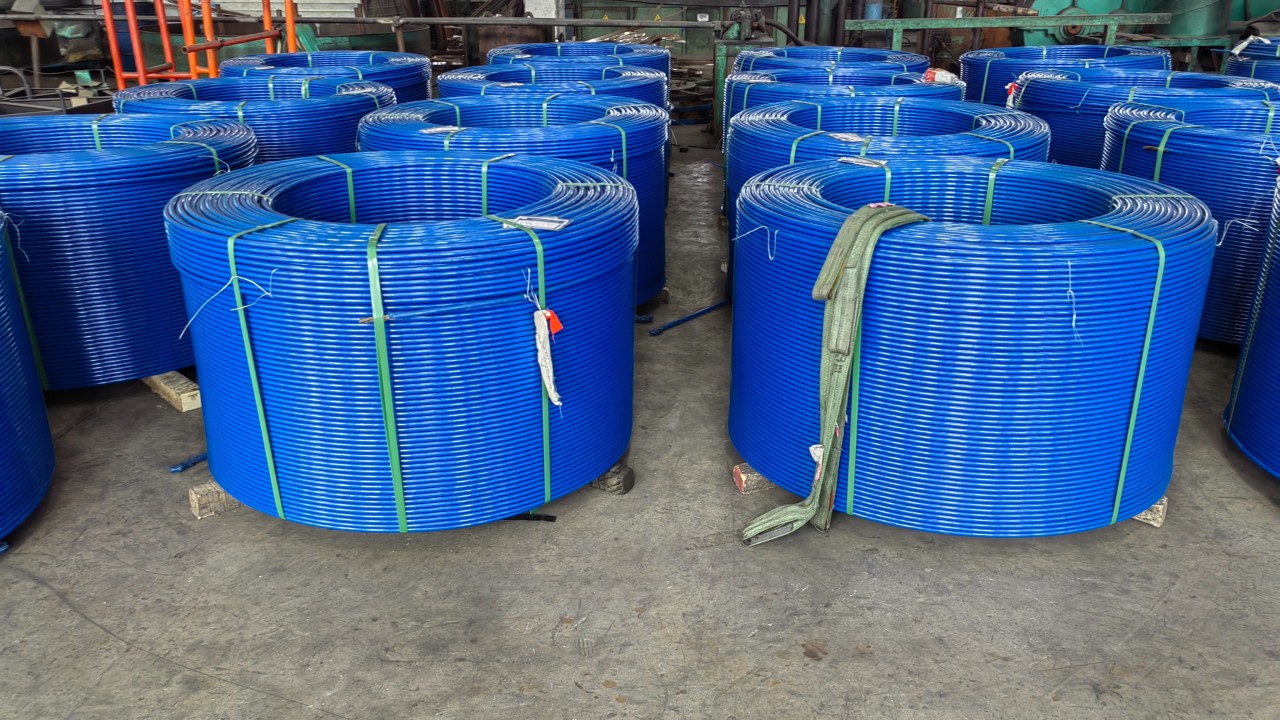
Unbonded PC Strand (Monostrand)
In an unbonded system, the steel strand is never in direct contact with the concrete.
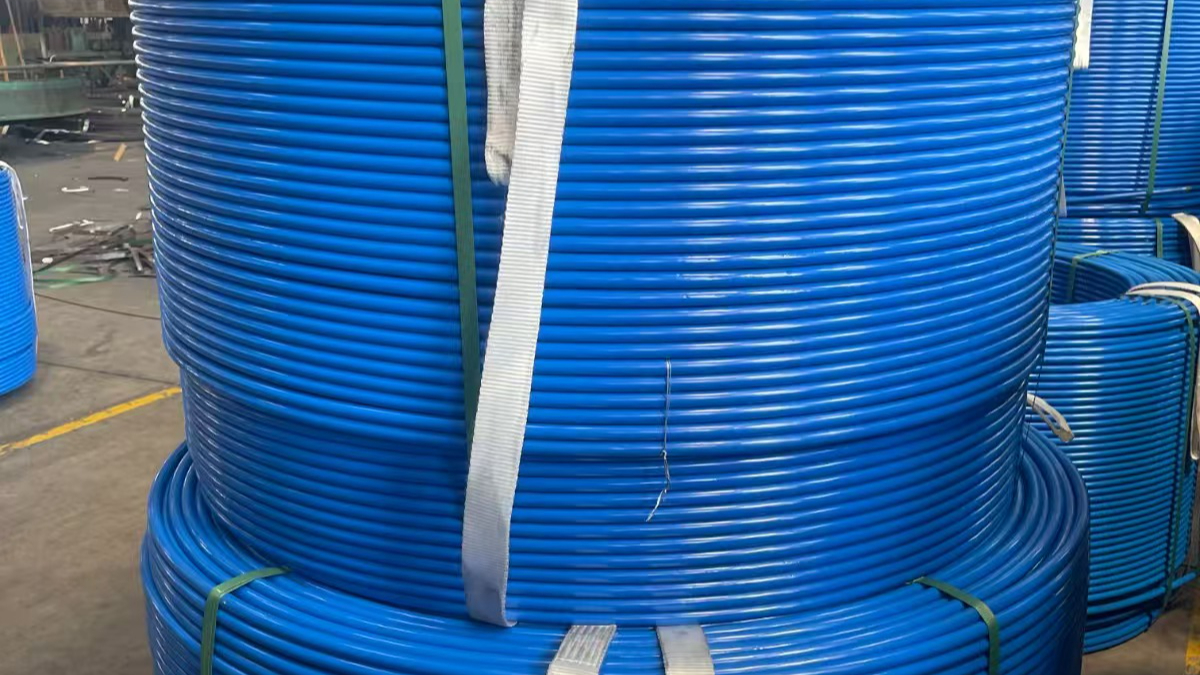
Design: The strand is coated with a corrosion-inhibiting grease and encased in a high-density polyethylene (HDPE) plastic sheath.
Mechanism: The strand can move longitudinally within the sheath. The prestressing force is transferred to the concrete solely through the anchorages at both ends.
Bonded PC Strand (Multi-strand)
In a bonded system, the strand eventually becomes part of the concrete mass.
Design: Multiple bare strands are placed inside a corrugated metal or plastic duct. After tensioning, the duct is filled with a high-strength cementitious grout.
Mechanism: The grout creates a permanent bond between the strand, the duct, and the surrounding concrete. The force is transferred through bond stress along the entire length of the strand.
2. Key Differences at a Glance
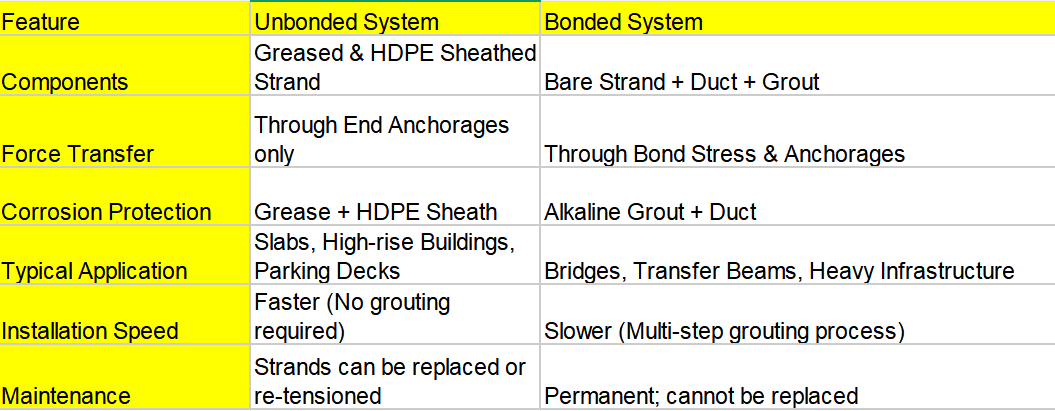
3. Application Strategy: Which to Choose?
When to use Unbonded (Global Overseas Specialty):
High-Rise Residential/Commercial: Because unbonded strands are thinner and more flexible, they allow for thinner slabs and lower floor-to-floor heights.
Seismic Zones: The ability of the strand to "slip" slightly within the sheath can provide better energy dissipation during an earthquake.
Fast-Track Projects: Since you don't have to wait for grouting, the construction cycle is significantly shorter.
When to use Bonded:
Heavy Loads: Ideal for bridge girders and heavy industrial foundations where maximum ultimate strength and load-sharing between strands are required.
Demolition Safety: If a bonded strand is accidentally cut during future renovations, the bond with the grout prevents the entire strand from "snapping back," localized failure only.
4. Technical Risks & Solutions
At Global Overseas, we emphasize that quality requirements differ for these two systems:
For Unbonded Strands: The integrity of the HDPE sheath is everything. A tear in the plastic during transit or installation can lead to moisture ingress and corrosion. We use premium-grade extrusion to ensure the sheath is impact-resistant.
For Bonded Strands: The focus is on Surface Condition. Bare strands must be free from pitting and heavy rust before they are placed in the ducts to ensure the grout bonds perfectly to the steel.
If your project demands speed and slender slab design, Unbonded PC Strand is your best bet. If you are building heavy-duty infrastructure designed for 100+ year lifespans under massive loads, Bonded systems are the industry standard.
Choosing between Unbonded and bonded systems requires more than just a material supplier; it requires a partner who understands the technical nuances of each application. At Global Overseas, we provide high-performance PC strand solutions tailored to the world’s most demanding engineering environments.
Integrated Solutions: We don't just supply strands. From Unbonded Monostrands with high-grade HDPE extrusion to Bonded Multi-strand systems including precision-engineered anchors and wedges, we ensure every component is system-tested for maximum efficiency.
Stringent Quality Control: All Global Overseas products meet and exceed ASTM A416 and BS 5896 standards. Every shipment is accompanied by full chemical and mechanical traceability, ensuring peace of mind for structural engineers.
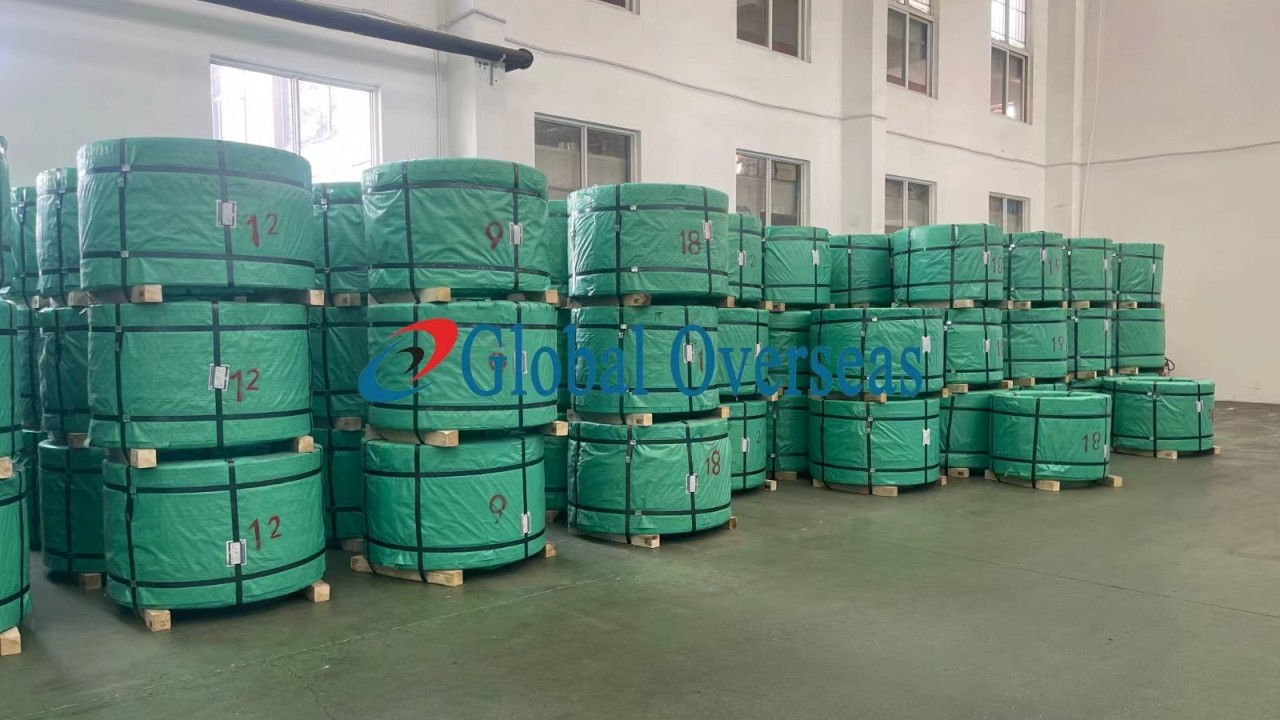
Maritime Logistics Mastery: We understand the risks of corrosion during long-haul transit. Our specialized moisture-resistant packaging and proactive logistics management ensure that your materials arrive at the job site—whether in the Middle East, North America, or Southeast Asia—in factory-pristine condition.
Whether you are designing a sleek PT slab for a high-rise or a heavy-duty bridge girder, Global Overseas delivers the strength and reliability your infrastructure deserves.
 Unbonded vs Bonded PC Strand:
 PC Strand for Post-Tension Sla
 PC Strand for Bridge Construct
 【Maritime Urgent Notice】Middle